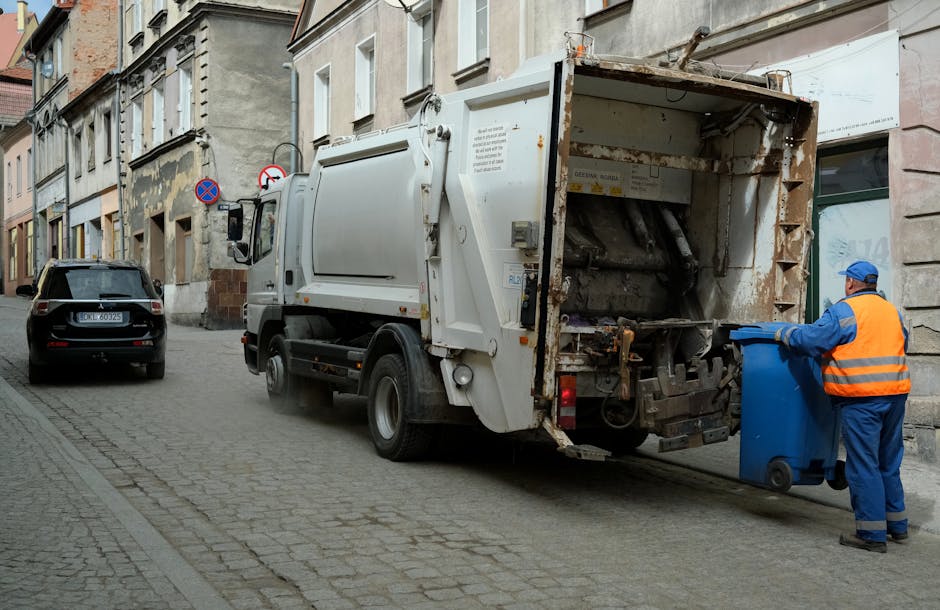
Broadway Market Hackney rubbish removal options: a practical guide for homes, flats, shops and busy weekends
If you live, work, or trade around Broadway Market, you already know the rhythm: narrow streets, lively footfall, flats above shops, deliveries arriving when they can, and not much room for a pile of unwanted stuff to sit around. That is exactly why Broadway Market Hackney rubbish removal options matter. Whether you are clearing a flat after a move, dealing with old furniture, getting rid of builders' waste, or just trying to reclaim a corner of the hallway, the right disposal route saves time, hassle, and a fair bit of stress.
This guide breaks down the main rubbish removal choices available around Broadway Market and Hackney, how they work in real life, who they suit best, and what to watch out for. You will also find a simple checklist, a comparison table, and a few practical tips that make the whole thing easier than it first looks. Truth be told, once you know the options, the decision gets much simpler.
Table of Contents
- Why Broadway Market Hackney rubbish removal options matters
- How Broadway Market Hackney rubbish removal options works
- Key benefits and practical advantages
- Who This Is For and When It Makes Sense
- Step-by-Step Guidance
- Expert Tips for Better Results
- Common Mistakes to Avoid
- Tools, Resources and Recommendations
- Law, Compliance, Standards, or Best Practice
- Options, Methods, or Comparison Table
- Case Study or Real-World Example
- Practical Checklist
- Conclusion
- Frequently Asked Questions
Why Broadway Market Hackney rubbish removal options matters
Broadway Market is not the sort of place where rubbish can just be left out and forgotten about. Space is tight, loading is awkward at certain times, and the area has a mix of residential, retail, hospitality, and creative uses. So the way you clear waste affects not only convenience, but also neighbour relations, access, and the general look and feel of the street.
For a flat on an upper floor, the problem may be old furniture that will not fit down the stairs without a plan. For a cafe or small shop, it may be broken packaging, commercial waste, or a surprise pile-up after a refit. For a landlord or agent, it may be a full property clearance after tenants move out. Different situations need different solutions, and that is the bit people often miss.
The wrong option can cost more than money. You may lose time waiting for a missed collection, pay for unnecessary capacity, or end up with waste sitting around while you try to find a last-minute fix. And if you are in a busy market area, that can turn into a real headache very quickly.
Expert summary: the best rubbish removal option is not always the cheapest or fastest on paper. It is the one that fits your access, volume, timing, and type of waste without creating more work for you later.
How Broadway Market Hackney rubbish removal options works
Most rubbish removal around Broadway Market falls into a few common routes. Some are better for small loads, some for mixed bulky waste, and some for regular commercial clearances. The right choice depends on what you need to remove, how quickly it needs to go, and whether you want help carrying items out.
1. Skip hire
Skips are familiar, but they are not always the neatest fit for Broadway Market itself. They are usually best where there is room to place one safely and legally, and where the waste is being generated over a few days rather than removed in one go. If you are doing a longer renovation, skip hire can make sense. If you need the space back today, it may feel slow and a bit clunky.
2. Man and van rubbish removal
This is often the most practical choice for mixed household waste, old furniture, garage clutter, loft junk, or end-of-tenancy clearances. A team comes to load the items, transport them, and dispose of them properly. For many Broadway Market properties, this is the sweet spot because it avoids the problem of leaving a skip outside or lugging heavy items through tight stairwells alone.
3. Council-style bulky waste collection
Some people look for a scheduled bulky waste pickup. That can be useful if your waste is small in volume and you are not in a rush. The trade-off is timing and flexibility. If you are coordinating a move-out, renovation, or shop refresh, waiting for a fixed slot may not be ideal. Still, for a few items, it can be a sensible and economical route.
4. Specialist clearance services
Some loads need a more focused approach: office clearance, builders' waste, garden debris, furniture disposal, or a full house or flat clearance. Specialist services are helpful because they match the crew and vehicle to the job. A bulky sofa, a pile of broken desks, or bags of builders' rubble all behave differently. Weirdly enough, rubbish has personalities. Not glamorous, but true.
5. Drop-off or self-haul options
Sometimes people hire a van, load the waste themselves, and take it away. This can be workable if you have the time, help, and vehicle. But around Broadway Market, self-haul is often less convenient than it sounds. Parking, lifting, timing, and disposal site rules all add friction. It is fine if you know exactly what you are doing. If not, it can become a half-day puzzle.
If you are considering a broader service mix, it may help to explore waste removal alongside related services such as flat clearance, furniture disposal, or builders waste clearance depending on what you are clearing.
Key benefits and practical advantages
Good rubbish removal is about more than getting rid of stuff. It clears mental clutter as well. You open a room, and suddenly it feels usable again. A hallway stops being a narrow obstacle course. A back room becomes storage, office space, or breathing room. That change matters.
- Faster turnaround: ideal when you need a space cleared before a handover, delivery, inspection, or event.
- Less lifting and strain: especially helpful for bulky furniture, awkward items, and upstairs properties.
- Better access management: useful in a busy area where you do not want waste blocking pavements or entrances.
- Cleaner presentation: important for rentals, shops, studios, and hospitality spaces near Broadway Market.
- More suitable for mixed waste: when your load includes different item types rather than one tidy pile.
- Reduced stress: not every job needs planning like a military operation. Sometimes you just want it gone.
There is also a practical sustainability angle. Choosing a provider or route that handles sorting, reuse, and recycling well can reduce what ends up as general waste. If that matters to you, it is worth reading about recycling and sustainability before you book.
Key takeaway: the best Broadway Market rubbish removal setup is usually the one that combines speed, safe handling, and sensible disposal without overcomplicating the job.
Who This Is For and When It Makes Sense
This topic is not just for people doing a dramatic clear-out. In reality, lots of smaller situations add up.
Residents and tenants
If you are moving out, replacing old furniture, or clearing years of accumulated bits from a loft or spare room, removal support can save you a long weekend. Flat living in Hackney often means awkward staircases, shared entrances, and limited storage. That makes a flexible clearance service very appealing.
Landlords and letting agents
End-of-tenancy clearances can be unpredictable. One property needs a single sofa removed, another has a full mix of bags, bedding, broken chairs, and small appliances. A service that can handle the lot is often the simplest route. For larger handovers, house clearance and home clearance options may be more suitable than piecing things together.
Shops, cafes, and small businesses
Broadway Market has plenty of businesses where stock rotation, packaging waste, old display furniture, and occasional refits create junk faster than expected. Regular or one-off business waste removal helps keep premises presentable and avoids last-minute panic before opening hours.
Contractors and renovators
Builders' waste is its own beast. Plasterboard, timber offcuts, tiles, packaging, and general site debris need a proper route out. If you are doing light works, a targeted collection may be enough. Bigger jobs need something more robust.
Anyone with bulky items and limited access
This is the big one. If you cannot easily move items yourself because of stairs, parking, time, or size, then outside help is usually the sensible option. To be fair, even one heavy wardrobe can turn into a two-person drama if you are doing it alone.
Step-by-Step Guidance
If you want a smooth experience, keep the process simple. Here is a practical way to approach it.
- Sort the waste by type. Separate furniture, general rubbish, cardboard, green waste, and construction debris if possible. You do not need perfect organisation, just enough clarity to avoid surprises.
- Check access. Note stairs, lifts, parking limits, width of hallways, and whether the load is coming from a rear garden, basement, or upper flat.
- Estimate volume. Think in terms of bags, boxes, or bulky items. A quick room-by-room scan is usually enough.
- Decide how fast it needs to go. Same-day, next-day, or flexible? That answer often narrows the options immediately.
- Match the service to the load. Furniture disposal, loft clearance, garage clearance, or office clearance may be more appropriate than a generic collection.
- Ask about sorting and disposal. A good provider should be clear about how items are handled, particularly reusable furniture and recyclable materials.
- Confirm the practical details. Time slot, access instructions, payment method, and what is excluded should all be clear before the team arrives.
For specific kinds of clear-out, it helps to choose the closest-fit service rather than forcing everything into one basket. A cluttered loft is not the same as a refit waste pile, and a half-empty office is not the same as a single broken wardrobe. That sounds obvious, but people do mix them up all the time.
Expert Tips for Better Results
A little preparation goes a long way. Not because the job is difficult, but because London access can be annoying in small, predictable ways.
Measure the awkward items first
If you have a sofa, mattress, cupboard, or desk that needs to come down stairs, measure doorways and turns. Even rough measurements help. It avoids those awkward moments where everyone stands around the landing thinking, well, that is not coming through there then.
Keep useful and unwanted items separate
This saves time and reduces the chance of accidental disposal. If you are clearing a flat or house, use one corner for keeps, one for donations or reuse, and one for rubbish. The tiny bit of structure matters more than it seems.
Be honest about what is included
If there are bags in the kitchen, a broken chair on the balcony, and boxes in a cupboard under the stairs, say so up front. Hidden waste can change the job size and the time needed.
Choose timing that works with the street
Around Broadway Market, timing can make the difference between a clean, quick removal and a frustrating wait while footfall and traffic build up. Early slots often feel calmer. Less noise, fewer interruptions, better access.
Think ahead about the next use of the space
If you are clearing for a redecoration, move, sale, or new tenant, it can be helpful to combine rubbish removal with a broader property reset. A full loft clearance, garage clearance, or furniture clearance may solve several small problems at once.
Common Mistakes to Avoid
Most clearance problems are preventable. The mistakes are usually not dramatic, just annoying.
- Underestimating the volume. One room full of clutter can become two van loads once it is sorted.
- Ignoring access issues. Shared entrances, narrow staircases, and parking restrictions can slow a job down quickly.
- Mixing waste types without checking. Builders' debris, furniture, and household rubbish may need different handling.
- Leaving everything until the last minute. That often limits your options and raises stress levels.
- Forgetting reusable items. Some furniture might be worth separating before disposal.
- Choosing purely on price. Cheapest is not always best if it means delays, poor communication, or the wrong vehicle.
Another sneaky one: people sometimes forget to tell the team about items in lofts, basements, or locked storage cages. Then the job starts, and everyone realises the real waste is still hidden away. Happens more than you would think.
Tools, Resources and Recommendations
You do not need much to prepare well, and that is the nice part. A few basics make the process smoother.
- Sticky notes or masking tape: label what is staying and what is going.
- Black bags or boxes: keep smaller waste grouped by type.
- Phone photos: useful when requesting a quote or explaining access.
- Measuring tape: handy for furniture, stair turns, and tight door frames.
- Gloves and sturdy footwear: common sense, really, but easy to overlook.
If you are comparing services, a quick look at pricing and quotes can help you understand what the process looks like before you book. For broader company background and values, about us is also worth a look.
And if you want confidence around service standards, payment handling, or how a provider manages customer information, those policy pages matter more than people think. A quick read of payment and security, insurance and safety, and terms and conditions can save misunderstandings later on.
Law, Compliance, Standards, or Best Practice
With rubbish removal in London, compliance is not something to treat casually. You do not need to become a waste expert overnight, but you do need to know the basics.
As a general rule, waste should be transferred and handled by people who understand their responsibilities, especially where commercial waste, bulky items, or construction debris are involved. Reputable operators should be able to explain what happens to the waste, how items are sorted, and how recyclable materials are separated where possible.
For business waste, the record-keeping and duty-of-care side matters even more. If you run a shop, cafe, or office, it is sensible to work with a provider that takes handling and disposal seriously. Not because it sounds impressive on a website, but because it reduces risk and keeps your operation tidy.
Best practice also includes clear communication about restricted items, safe lifting, access routes, and whether the property has fragile surfaces, shared corridors, or tight stairwells. That is especially relevant in older Hackney buildings, where a little care goes a long way.
It is also worth checking that the provider's approach to sorting, reuse, and recycling is sensible and transparent. If sustainability matters to you, the recycling and sustainability page gives a useful sense of that approach.
Options, Methods, or Comparison Table
Here is a straightforward comparison of the most common Broadway Market Hackney rubbish removal options.
| Option | Best for | Main advantage | Main drawback |
|---|---|---|---|
| Skip hire | Renovations, ongoing clear-outs, larger loads | Handy for multi-day projects | Needs space and planning |
| Man and van removal | Bulky waste, mixed household items, fast clearances | Flexible and labour-inclusive | Usually less suited to long-duration jobs |
| Bulky waste pickup | A few large items, lower urgency | Simple for small volumes | Less flexible on timing |
| Specialist clearance | Flats, offices, garages, lofts, furniture, builders' waste | Tailored to the load | Needs clearer upfront details |
| Self-haul | People with a van, time, and lifting help | Control over timing | Most effort on your side |
In a place like Broadway Market, where access and timing can be tricky, man and van style removal often becomes the most practical middle ground. But if you have a long project, skip hire may still be the better fit. It depends. Annoying answer, but honest.
Case Study or Real-World Example
Imagine a first-floor flat just off Broadway Market. The tenant has moved out, the hallway is full of a worn sofa, a broken shelving unit, two mattresses, assorted bags, and a couple of small items from the kitchen. There is no lift, the stairwell is narrow, and the building shares an entrance with other residents.
In that situation, a simple one-size-fits-all plan is not ideal. A skip would be awkward, and self-haul would mean lifting heavy items through a difficult stairwell, probably on a weekday morning when everyone is trying to get on with their day. A better option is a removal service that can load the items quickly, work around access limits, and handle sorting on the back end.
Now imagine the same street, but this time it is a small shop replacing display furniture and clearing packaging after a stock refresh. The waste is lighter, but the timing matters more. Early collection before opening hours, or a carefully scheduled slot, keeps the frontage tidy and avoids interrupting customers. Same postcode, different problem. Different solution.
That is really the point of this whole topic. Broadway Market rubbish removal is not about finding the single best method for everyone. It is about choosing the method that fits your exact mess, access, and deadline.
Practical Checklist
Use this checklist before you book or plan anything.
- Have I identified the main waste type?
- Do I know whether it is household, furniture, garden, builders', or business waste?
- Have I checked stairs, lifts, parking, and entry access?
- Have I separated items I want to keep?
- Do I know roughly how much waste there is?
- Is there anything awkward, heavy, or fragile?
- Do I need same-day or next-day collection?
- Have I checked whether any items need special handling?
- Have I reviewed pricing, payment, and terms?
- Have I confirmed the date and time window clearly?
If you can tick most of those boxes, you are already ahead of the game. A small bit of preparation can save a surprisingly large amount of friction.
Conclusion
Broadway Market Hackney rubbish removal options are best understood as a set of practical tools, not a single magic fix. For some people, the answer is a quick man and van clearance. For others, it is furniture disposal, loft clearance, builders' waste removal, or a full home clearance. The right choice depends on the load, the access, and how quickly you want the space back.
What matters most is making the job simpler, safer, and less stressful. When you choose the right route, the relief is immediate. The clutter disappears, the room opens up, and the whole property feels lighter. Nice feeling, that.
If you are comparing your next step, start with the type of waste, note your access constraints, and then look for the most suitable service rather than the most obvious one. That approach usually saves time and avoids the sort of hassle nobody needs on a busy Hackney street.
Get a free quote today and see how much you can save.
Frequently Asked Questions
What are the main Broadway Market Hackney rubbish removal options?
The main options are skip hire, man and van removal, bulky waste pickup, specialist clearance services, and self-haul. The best one depends on the amount of waste, access to the property, and how quickly you need it gone.
Which option is best for a flat near Broadway Market?
For most flats, especially upper-floor properties with narrow stairs or limited parking, a labour-included man and van clearance is usually the most practical choice. It reduces lifting and avoids the issues that come with leaving a skip outside.
Is skip hire suitable in Broadway Market?
Sometimes, yes, but only if you have enough space and the placement is practical. In tighter residential or mixed-use streets, a skip can be awkward, so it is worth checking whether a collection service would be easier.
Can furniture be removed as part of rubbish removal?
Yes. Old sofas, wardrobes, tables, beds, and similar bulky items are commonly removed as part of furniture clearance or general rubbish removal. If the items are reusable, it can be worth separating them first.
How do I know if I need builders' waste clearance?
If your waste includes rubble, timber offcuts, packaging from materials, tiles, or debris from renovation work, builders' waste clearance is probably the better fit. Mixed household rubbish and construction waste are not always handled in exactly the same way.
What should I do before a clearance team arrives?
Separate what is staying, note any access issues, and make sure the team knows about stairs, parking limits, lifts, or items stored in different rooms. A few minutes of preparation can make the job much smoother.
Are there better options for office or business waste?
Yes. If you are clearing a commercial space, business waste removal or office clearance is often the right route because it is better suited to workstations, filing, packaging, and mixed workplace items.
Can rubbish removal help with end-of-tenancy clearances?
Absolutely. End-of-tenancy jobs often involve leftover furniture, bags of general waste, and items that need to be removed quickly before inspection or handover. Flat clearance and home clearance services are often useful here.
What are the biggest mistakes people make?
The most common mistakes are underestimating the amount of waste, forgetting access problems, mixing different waste types without checking, and leaving the job too late. Those are the ones that cause avoidable stress.
Is recycling part of rubbish removal?
It should be where possible. Good practice is to sort reusable and recyclable items rather than sending everything to general waste. If sustainability matters to you, ask how the provider handles sorting and recovery.
How do I compare pricing fairly?
Compare like with like. Check whether lifting, loading, disposal, travel, and any special items are included. A low headline price is not always the best value if it hides extra charges later on.
Who should I contact if I want to book?
If you are ready to move forward, the easiest next step is to use the site's contact page at contact us. If you want to understand the company first, the about us page is a good place to start.
And once the clutter is gone, you really do feel it in the room. More light, more space, less noise. Simple as that.